



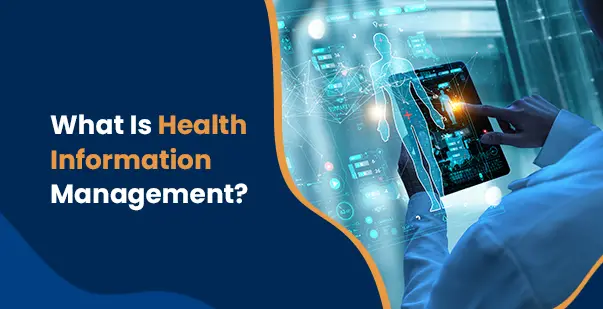
What Is Health Information Management?

September 17, 2025
Health information management (HIM) is something you’ve experienced anytime you filled out a form at a clinic, waited for test results, or requested medical records, then you’ve already experienced health information management – whether you realized it or not. It plays a quiet but vital role in making healthcare work behind the scenes. Imagine you’re admitted to an ER after an accident. Within minutes, doctors can see your allergies, medications, and medical history — because HIM ensures your records are accurate and accessible.
So, what is health information management, exactly? Often referred to as HIM, this field is all about how health data is gathered, protected, analyzed, and used. It’s the system that ensures your information is available when your doctor needs it – without compromising your privacy. As healthcare becomes more digital, the need for professionals who understand how to handle this sensitive data keeps growing.
This guide unpacks HIM in plain terms: what it means, what HIM professionals do, where they work, and why it matters more now than ever.
Defining Health Information Management
At its heart, health information management is about making sure patient data is correct, easy to find when needed, and kept safe from unauthorized access.
The Indian Health Service (IHS.gov) emphasizes that HIM isn’t just about records – it’s about people working together to manage those records, ensure data is coded correctly, and keep everything confidential and secure.
San Diego County’s career guide adds that HIM is also about making sure records meet all technical and legal standards. This includes assessing files for accuracy and staying in compliance with healthcare laws and regulations.
What HIM Professionals Actually Do
Health information management covers a wide range of roles and responsibilities. HIM is not a single job title – it’s an umbrella that includes everything from maintaining patient files to analyzing data for public health decisions.
Some of the core responsibilities HIM professionals take on include:
- Managing medical records: Making sure patient histories are complete, up to date, and easy to retrieve.
- Coding health data: Assigning the right billing and diagnostic codes like ICD-10 (International Classification of Diseases) and CPT (Current Procedural Terminology) for insurance claims and tracking trends.
- Creating data policies: Establishing how data is stored, accessed, and eventually destroyed.
- Ensuring compliance: Helping facilities follow privacy laws like HIPAA.
- Handling requests: Processing releases of information for insurance, patient needs, and legal use.
- Analyzing data: Looking at trends and reports to help improve care, policies, and planning.
SWVMHI (Virginia DBHDS) describes HIM professionals as planners and organizers who figure out how to collect, sort, and deliver critical data to the right teams in a healthcare setting.
Where HIM Happens: Clinical and Non-Clinical Settings
You’ll find HIM professionals in a lot more places than just hospital record rooms. These roles exist in many settings where healthcare data needs to be stored, analyzed, or protected.
For example:
- Hospitals and health systems: Coordinating data across departments to ensure seamless care.
- Outpatient clinics: Keeping charts, referrals, and appointment histories organized.
- Behavioral health centers: Protecting highly sensitive mental health and substance use records.
- Public health agencies: Collecting data that helps track disease outbreaks or plan services.
- Insurance and billing offices: Verifying claims, matching them with clinical documentation, and auditing files.
- Correctional health services: Managing private health data for inmates and detainees.
Why HIM Is Essential to Modern Healthcare
Every time a patient visits a doctor, undergoes a lab test, fills a prescription, or has a procedure done, that information gets added to their record. With millions of these interactions happening daily, modern healthcare generates a huge amount of data.
HIM is what keeps this system running smoothly. Here’s why it’s indispensable:
- Better patient care: When records are accurate and complete, providers can make better decisions.
- Efficiency: Organized data makes scheduling, billing, and coordination between departments much faster.
- Legal protection: Properly managed records help meet HIPAA and other data protection laws.
- Public health and research: De-identified health data helps scientists and officials track trends and make improvements.
HIM and HIPAA: Managing PHI Securely
Because HIM professionals handle protected health information (PHI), they work closely with HIPAA rules every day.
HIPAA – the Health Insurance Portability and Accountability Act – requires anyone handling patient data to put safeguards in place that prevent misuse or unauthorized access. HIM teams are often the ones responsible for building and enforcing those protections.
Some common protections include:
- Setting up role-based access, so only authorized staff can see certain data.
- Using audit trails to monitor who accesses what and when.
- Storing files in secure digital systems with backup protocols.
- Providing training for every employee who touches patient data.
- Writing clear policies for how long to keep records and how to dispose of them securely.
Read More: Get Certified for HIPAA Essentials For Medical Professionals
Qualifications: Who Works in HIM?
People working in HIM come from all kinds of backgrounds, but most bring a combination of healthcare knowledge, tech skills, and an eye for detail. Many also hold certifications or degrees specific to health information.
You’ll find HIM professionals working under many job titles, such as:
- Health Information Technician
- Medical Coding Specialist
- Clinical Documentation Improvement (CDI) Specialist
- Privacy or Compliance Officer
- Health Data Analyst
- HIM Director or Department Lead
These roles typically require:
- An associate’s or bachelor’s degree in health information management, informatics, or a related field.
- Certifications like RHIT (Registered Health Information Technician) or RHIA (Registered Health Information Administrator).
- Ongoing training to keep up with new technology and changes in healthcare law.
As IHS.gov points out, HIM teams rarely work in isolation – they often collaborate with doctors, nurses, IT teams, and compliance managers to get the job done right.
Career Growth and Outlook
Health information management is one of the more stable and steadily growing fields in healthcare. The move toward digital health records, combined with stricter privacy rules, is making HIM more important every year.
According to various workforce projections:
- According to U.S. Bureau of Labor Statistics projections, HIM roles are growing faster than average, especially in data-heavy specialties.
- Remote and hybrid work options are becoming the norm for coding and analyst roles.
- Specialized HIM positions in behavioral health, forensic medicine, and compliance are in high demand.
The San Diego County career path guide lays out clear advancement routes, from entry-level technicians to leadership roles in hospitals and government agencies.
If you’re detail-oriented, tech-savvy, and interested in improving patient care behind the scenes, HIM offers a rewarding and future-proof career path.
Final Thoughts
So, what is health information management? In short, it’s what keeps the healthcare system organized, efficient, and secure. HIM ensures that every bit of your medical data – from a routine check-up to a life-saving surgery – is handled with care, accuracy, and confidentiality.
Whether you’re a provider, a patient, or someone considering a career in health information, understanding HIM gives you insight into the systems that quietly power modern medicine. If you’re exploring careers, consider certification pathways like RHIT(Registered Health Information Technician) or RHIA(Registered Health Information Administrator) to enter this high-demand field.
Read More: Why Was HIPAA Created? Understand Its Origin

HIPAA Courses
Recent Posts
Blockchain Healthcare Technology: HIPAA Compliant?
March 25, 2026
Does HIPAA Apply to Wearable Health Technology?
March 19, 2026
 Your Cart